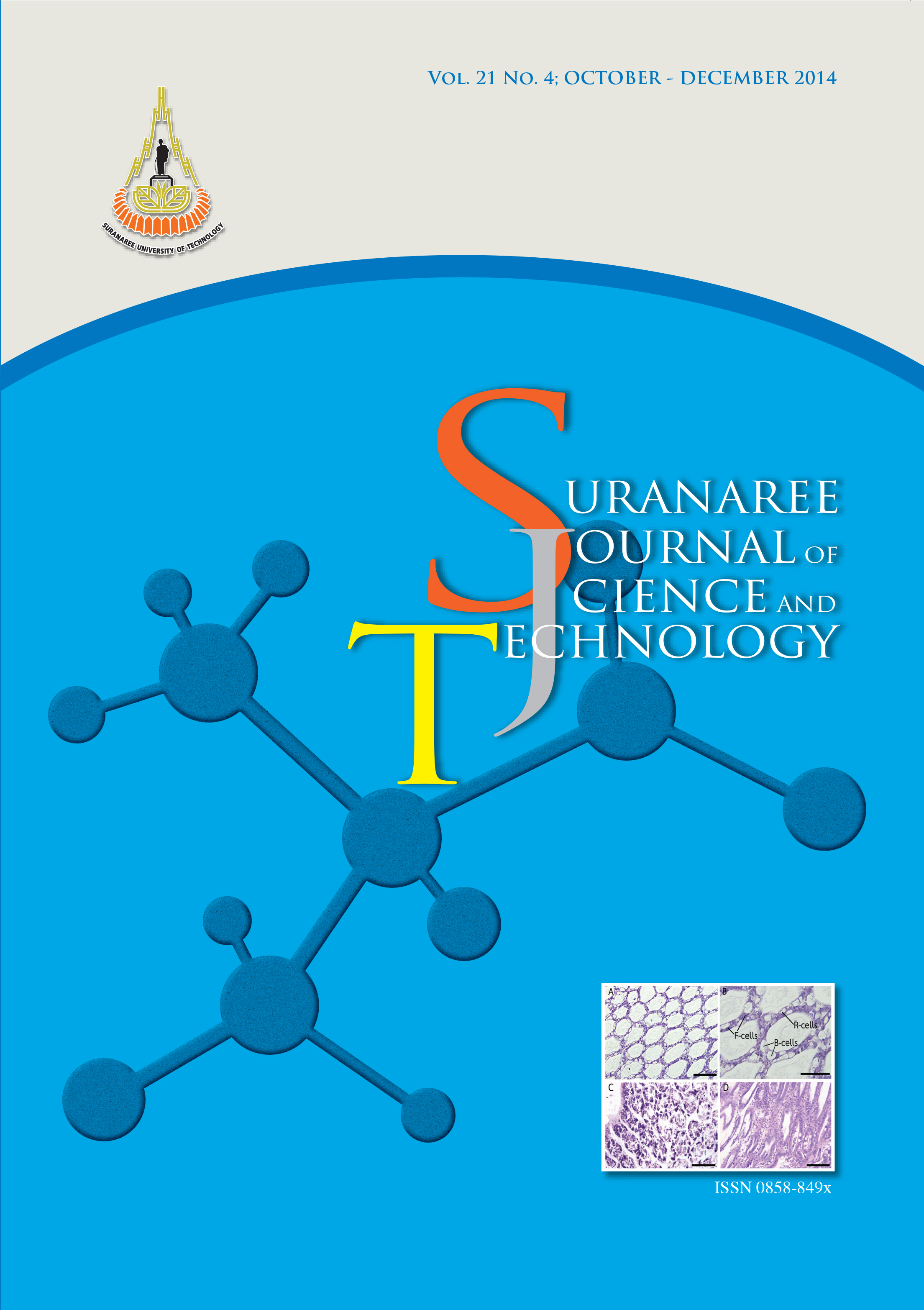
IDENTIFICATION OF BACTERIAL AGENT(S) FOR ACUTE HEPATOPANCREATIC NECROSIS SYNDROME, A NEW EMERGING SHRIMP DISEASE
Keywords:
Penaeid shrimp, acute hepatopancreatic necrosis syndrome (AHPNS), 16S rRNA gene, Vibrio speciesAbstract
A new emerging shrimp disease known as acute hepatopancreatic necrosis syndrome (AHPNS) has been reported to cause significant losses among shrimp farms in China (2009), Vietnam (2010), and Malaysia (2011). Recently, it has been reported to affect shrimp (Penaeusmonodon and P. vannamei) in the eastern Gulf of Thailand (2012). The disease is characterized by mass mortalities (reaching up to 100% in some cases) during the first 20-30 days post-stocking in grow-out ponds. The apparent spread of AHPNS throughout the region suggests that infectious or at least biological agent may be involved. Shrimp suffering from AHPNS show significant atrophy of hepatopancreas (HP), pale to white HP due to pigment loss in the connective tissue capsule and guts with discontinuous or no contents. The purpose of this study was to identify if bacteria could be the cause of AHPNS. DNA samples were prepared either directly from hepatopancreatic tissue or from culturable bacteria isolated from hepatopancreas of the diseased shrimp as templates to specifically amplify 770 bp fragment of 16S rRNA gene for bacterial classification. Nucleotide sequences obtained from the direct DNA extraction of the hepatopancreas revealed majority of Vibrio species, including V. parahaemolyticus, V. harveyi, V. vulnificus, and V. chaqassi. Similarly, the consensus sequences obtained from nine culturable bacterial isolates were identified as V. parahaemolyticus. The healthy shrimps challenged with the selected Vibrio isolate at a dose of 103 CFU per shrimp showed high mortality within 6 h after injection, however AHPNS histopathologywas not observed.
References
Flegel, T.W. (2012). Historic emergence, Impact and current status of shrimp pathogens in Asia. J. Invertebr. Pathol.110:166-173.
Lightner, D.V., Redman, R.M., Pantoja, C.R., Noble, B.I., and Tran, L. (2012). Early mortality syndrome affects shrimp in Asia. Global Aquaculture Advocate. 15:40.
Tran, L., Nunan, L., Redman, R.M., Mohney, L.L., Pantoja, C.R., Fitzsimmons,K., and Lightner, D.V. (2013). Determination of the infectious nature of the agent of acute hepatopancreatic necrosis syndrome affecting penaeid shrimp. Dis Aquat Organ, 105:45-55.
Zhou, J., Fang, W., Yang, X., Zhou, S., Hu, L., Li, X., Qi, X., Su, H., and Xie, L.(2012). A Nonluminescent and Highly Virulent Vibrio harveyi Strain Is Associated with “Bacterial White Tail Disease” of Litopenaeus vannamei Shrimp. PLOS ONE. 7(2): e29961.