INVESTIGATION OF STRUCTURAL, OPTICAL, AND ELECTRICAL PROPERTIES OF ZNO THIN FILMS FOR ELECTRO-OPTICAL DEVICES
Keywords:
ZnO, Electrochemical deposition, Thermal oxidation, Electro-optical devicesAbstract
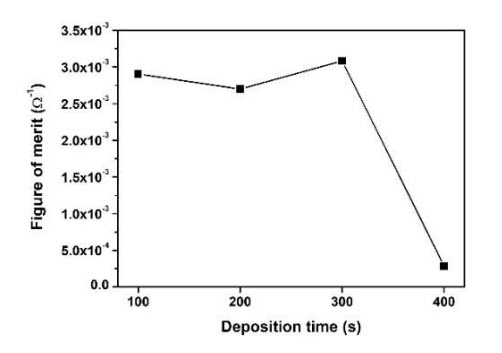
ZnO thin films were successfully deposited on fluorine-doped tin oxide substrates using a twoelectrode homemade electrochemical deposition system. First, a zinc metal layer was deposited on the substrate via an electrochemical process, from aqueous solutions of zinc nitrate for various deposition times. Afterward, the Zn metal layer was transformed into multiple ZnO thin films through thermal oxidation under ambient air. Finally, a post-treatment was performed on the ZnO thin films by calcination. The morphology of the ZnO thin films, when observed under a scanning electron microscope, exhibited rough surfaces and porous characteristics. The X-ray diffraction patterns and the Raman shifts indicated hexagonal wurtzite structures. Moreover, the Fouriertransform infrared spectroscopy results confirmed the chemical structure of the films to be ZnO without a residue. The average optical transmittance values in the visible region were greater than 80%. The band gap energy was in the range of 3.13 to 3.43 eV. The four-point probe measurement revealed various sheet resistance values in the range of 167.21 to 1,066.28 /sq. Concerning the electro-optical property evaluation, the optical transmittance and sheet resistance values were considered for calculating the figure of merit. It was found that the highest value reached 3.0810-3 -1, indicating that ZnO thin films have a potential application in electro-optical devices.
References
Battas, M., Atourki, L., Bouabid, K., Ihlal, A., Abd-Lefdil, M., and Regragui, M. (2021). Investigations on the Growth Mechanism of Nanostructured ZnO: Shedding Light on the Effect of Al3+ Doping, Surf. Eng. Appl. Electrochem., 57(1):1-9.
Gonçalves, R.A., Toledo, R.P., Joshi, N., and Berengue, O.M. (2021). Green Synthesis and Applications of ZnO and TiO2 Nanostructures, Molecules., 26(8):2,236.
Iqbal, J., Jilani, A., Hassan, P.M.Z., Rafique, S., Jafer, R., and Alghamdi, A.A. (2016). ALD grown nanostructured ZnO thin films: Effect of substrate temperature on thickness and energy band gap, J. King Saud Univ. Sci., 28(4):347-354.
Krobthong, S., Nilphai, S., Choopun, S., and Wongrerkdee, S. (2020). Synthesis and characterization of ZnO nanoparticle films its application in dye-sensitized solar cells, Dig. J. Nanomater. Biostructures., 15(3):885-894.
Krobthong, S. and Wongrerkdee, S. (2020). Incorporation of Fe and Cu for antibacterial performance enhancement of Fe-Cu-ZnO nanocomposites synthesized by a facile chemical precipitation. J. Met. Mater. Miner., 30(3):38-45.
Liu, L., Jiang, J., Xu, Z., Zhou, J., and Li, Y. (2021). Enhanced electrical conductivity of PEDOT-encapsulated silver nanowire film pretreated with surfactants. Colloid Polym. Sci., 299:595-601.
Liu, Y., Qiao, Y., Nie, C., Xiong, L., Zeng, Q., Wang, B., Lv, H., Yu, H., and Yang, G. (2019). High photoelectric performance of Cu-based AZO multilayer films deposited via TiO2 barrier layer and oxygen-containing atmosphere. Ceram. Int., 45(18):24,303-24,308.
Muchuweni, E., Sathiaraj, T.S., and Nyakotyo, H. (2017). Synthesis and characterization of zinc oxide thin films for optoelectronic applications. Heliyon., 3(4):e00285.
Pecharapa, W., Santibenchakul, S., Khamon, W., Ruangon, K., and Noonuruk, R. (2019). Effects of group-III dopants on the structural and optical properties of sol-gel derived ZnO thin films, Suranaree J. Sci. Technol., 26(1):44-50.
Rahman, A., Harunsani, M.H., Tan, A.L., Ahmad, N., Hojamberdiev, M., and Khan, M.M. (2021). Effect of Mg doping on ZnO fabricated using aqueous leaf extract of Ziziphus mauritiana Lam. for antioxidant and antibacterial studies, Bioprocess Biosyst. Eng., 44(4):875-889.
Rodwihok, C., Choopun, S., Ruankham, P., Gardchareon, A., Phadungdhitidhada, S., and Wongratanaphisan, D. (2019). UV sensing properties of ZnO nanowires/nanorods. Appl. Surf. Sci., 477:159-165.
Rong, P., Ren, S., and Yu, Q. (2019). Fabrications and Applications of ZnO Nanomaterials in Flexible Functional Devices-A Review, Crit. Rev. Anal. Chem., 49(4):336-349.
Rosas-Laverde, N.M., Pruna, A., Cembrero, J., Orozco-Messana, J., and Manjón, F.J. (2019). Performance of graphene oxide-modified electrodeposited ZnO/Cu2O heterojunction solar cells, Bol. Soc. Esp. Ceram. V., 58(6):263-273.
Salman, O.N., Dawood, M.O., Ali, A.K., Ahmed, D.S., and Hassoon, K.I. (2017). Low cost synthesis of ZnO nano thin films by electrochemical deposition, Dig. J. Nanomater. Biostructures., 12(3):719-726.
Shahzad, S., Javed, S., and Usman, M. (2021). A Review on Synthesis and Optoelectronic Applications of Nanostructured ZnO, Front. Mater., 8:613,825.
Shirvani, M. and Naji, L. (2021). Interface engineering of electrochemically deposited ZnO nanorods as electron transport layer in polymer solar cells using organic dyes. Mater. Chem. Phys., 259:124,064.
Sujinnapram, S., Nilphai, S., Moungsrijun, S., Krobthong, S., and Wongrerkdee, S. (2021). Clustered zno nanoparticles synthesized via precipitation for photocatalytic degradation of methyl orange and Glyphosate, Dig. J. Nanomater. Biostructures., 16(1):317-329.
Tang, G., Liu, H., and Zhang, W. (2013). The Variation of Optical Band Gap for ZnO: In Films Prepared by Sol-Gel Technique, Adv. Mater. Sci. Eng., 2013:348,601.
Timuda, G.E. and Waki, K. (2020). Galvanostatic electrodeposition of ZnO nanosheet: effect of different applied current densities and deposition times on the nanosheet morphology, Adv. Nat. Sci-Nanosci., 11(2):025,005.
Wongrat, E., Nuengnit, T., Panyathip, P., Chanlek, N., Hongsith, N., and Choopun, S. (2021). Highly selective room temperature ammonia sensors based on ZnO nanostructures decorated with graphene quantum dots (GQDs), Sens. Actuators B. Chem., 326:128,983.
Wongrerkdee, S., Moungsrijun, S., Pimpang, P., Hongsith, K., and Choopun, S. (2021). Linking bridge improvement of ZnO/N719 interfaces via ammonia treatment for efficiency enhancement of dye-sensitized solar cell, Surf. Interfaces, 23:100,991.