IDENTFICATION OF MAXIMUM MELT BLEND RATIO FOR POLYLACTIDE/POLYBUTYLENE SUCCINATE BASED ON RHEOLOGICAL MODEL
Keywords:
Polylactide (PLA), Polybutylene succinate (PBS), Rheological modelAbstract
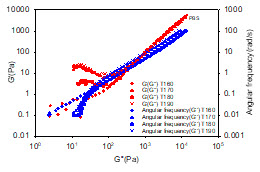
Rheological model of the polylactide (PLA)/polybutylene succinate (PBS) blend as a function of shear rate, temperature and PBS content was proposed for predicting the shear viscosity of PLA/PBS blends. Melt blending of PLA/PBS with various ratios was prepared by using a single screw extruder and a disk shape sample required for rheological measurement was obtained by a compression molding process. Effect of PBS content on the compatibility of the blend was thoroughly investigated via rheological behavior. The results of rheological properties indicated that below 35% of PBS, the PLA/PBS blends showed an acceptable miscibility level. With the addition of PBS, the shear viscosity was greatly reduced and more liquid-like of the PLA/PBS melt flow was noticeable. The steady shear rate testing of the blends over the shear rate of 0 – 1000 s-1 exhibited the shear-thinning non-Newtonian behavior. The shear viscosity of the PLA/PBS blends as a function of shear rate, softening temperature and %PBS content was able to predict from the modified Cross model. Moreover, each blending ratio contained individual set of zero shear viscosity and infinite shear viscosity indicating a profound impact of PBS on the flow behavior of the blend and partial miscibility of the melt blend process.
References
Bhatia, A., Gupta, R.K., Bhattacharya, S.N., and Choi, H.J. (2007). Compatibility of biodegradable poly(lactic acid) (PLA) and poly(butylene succinate) (PBS) blends for packaging application. Korea-Aust Rheol. J., 19(3):125-131.
Deng, Y. and Thomas N.L. (2015) Blending poly(butylene succinate) with poly(lactic acid): Ductility and phase inversion effects. Eur. Polym. J., 71:534-546.
Fang, Q. and Hanna, M.A. (1999). Rheological properties of amorphous and semicrystalline polylactic acid polymers. Ind. Crop Prod., 10:47-53.
Gajria, A.M., Dave, V., Gross, R.A., and McCarthy, S.P. (1996). Miscibility and biodegradability of blends of poly (lactic acid) and poly (vinyl acetate). Polymer., 37:437-444.
Nofar, M., Maani, A.H., Sojoudi, M., Heuzey, C., and Carreau, P.J. (2015). Interfacial and rheological properties of PLA/PBAT and PLA/PBSA blends and their morphological stability under shear flow. J. Rheol., 59:317-333.
Ogata, N., Jimenez, G., Kawai, H., and Ogihara, T. (1997). Structure and thermal/mechanical properties of poly (l-lactide)-clay blend. Poly Phys., 35:389-396.
Phuong, V.T., Coltelli1, M.B., Anguillesi1, I., Cinelli1, P., and Lazzeri1, A. (2014). Modification of the mechanical behavior in the glass transition region of poly(lactic acid) (PLA) through catalyzed reactive extrusion with poly(carbonate) (PC). AIP Conf. Pro., 1,599:142-145.
Rao, M.A., Okecbukwu, P.E., Da Silvab, P.M.S., and Oliveirab, J.C. (1997). Rheological behavior of heated tapioca starch dispersions in excess water: role of starch granule. Carbohydr. Polym., 38:123-132.
Sheth, M., Kumar, R.A., Dave, V., Gross, R.A., and McCarthy, S.P. (1997). Biodegradable polymer blends of poly(lactic acid) and poly(ethylene glycol). J. of Appl. Polym. Sci., 66:1,495-1,505.
Shumsky, V.F., Getmanchuk, I., Ignatova, T., Maslak, Y., Cassagnau, P., Boiteux, G., and Melis, F. (2010). Effect of nanofillers on the phase separation and rheological properties of poly(methylmethacrylate)/poly(styrene – co – acrylonitrile) blends. Rheol. Acta., 49:827-836.
Utracki, L.A. (1983). Melt flow of polymer blends. Polym. Eng. Sci., 23:602-609.
Vernay, V. and Michel, A. (1985). Influence de la polydispersité sur le comportement rhéologique à ľétat fondu polypropylene. Rheol. Acta., 24(6):627-631.
Wisniewski, C., Marin, G., and Monge, P. (1985). Viscoelastic behavior of non-compatible blends: polystyrene-polycarbonate. Eur. Polym. J., 21:479-484.
Yokohara, T., Nobukawa, S., and Yamaguchi, M. (2011). Rheological properties of polymer composites with flexible fine fibers. J. Rheol., 55:1,205-1,219.