Enhancing Cybersecurity in Industrial Internet of Things Systems Using Ensemble Learning Against False Data Injection Attacks
DOI:
https://doi.org/10.59796/jcst.V16N1.2026.151Keywords:
industrial internet of things, false data injection attack, ensemble learning, weighted voting, intrusion detection, cybersecurity, random forest, XGBoostAbstract
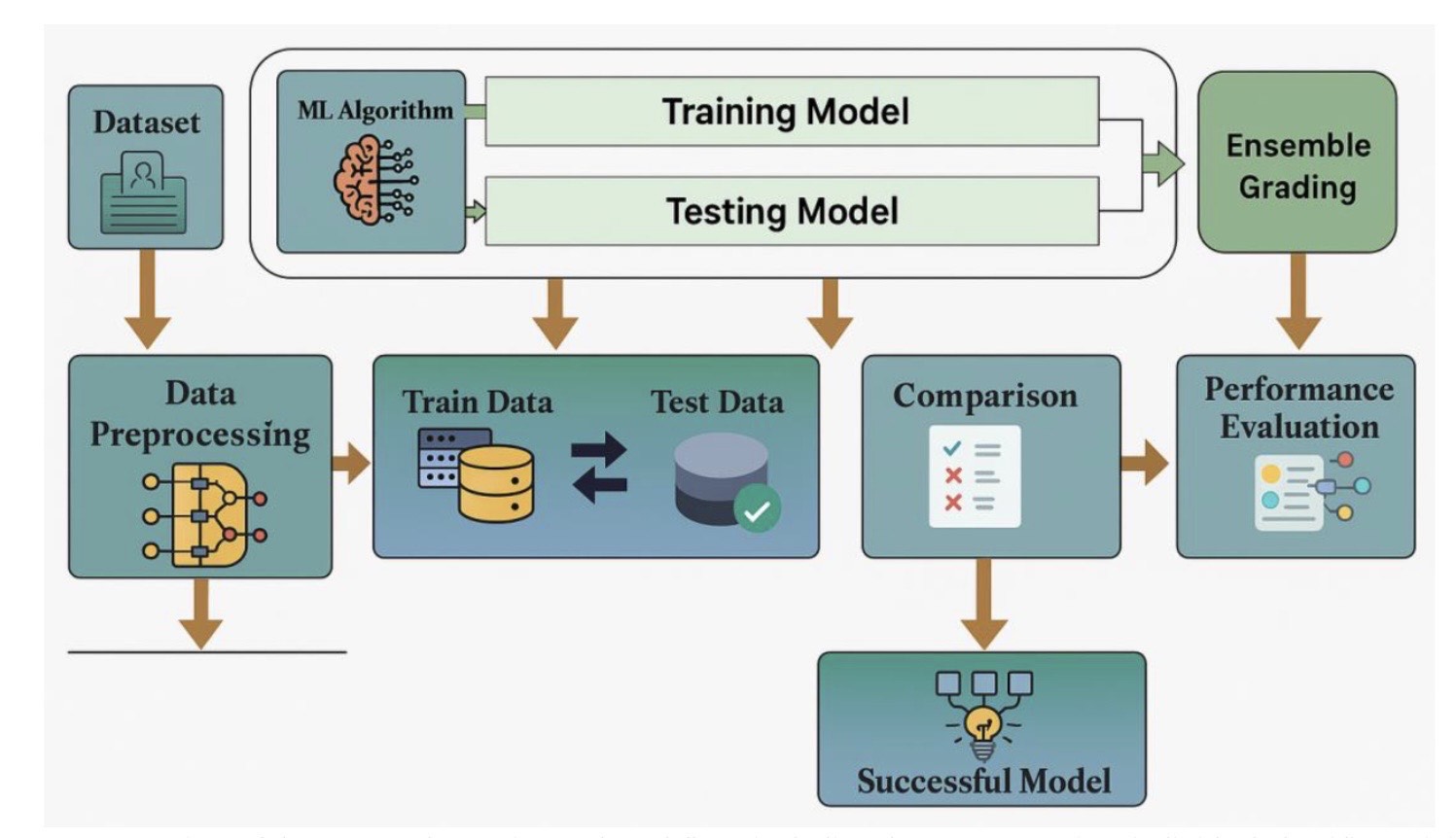
False Data Injection Attacks (FDIAs) pose critical threats to Industrial Internet of Things (IIoT) systems by manipulating sensor data to cause operational disruptions and safety hazards. Traditional intrusion detection systems struggle to identify the subtle anomalies characteristic of FDIAs, necessitating advanced machine learning approaches. This study develops a weighted voting ensemble framework integrating Random Forest, XGBoost, Neural Network, and Logistic Regression with F1-score-based dynamic weight assignment for optimized FDIA detection. The proposed ensemble was evaluated on the UKMNCT_IIoT_FDIA dataset containing 15,425 instances across 30 features. Using 70–30 train–test split, model performance was assessed through accuracy, precision, recall, F1-score, and confusion matrix analysis. Results demonstrate exceptional performance: 99.71% accuracy, 99.72% precision, 99.72% recall, and 99.72% F1-score. Confusion matrix analysis revealed only 2 false negatives and 9 false positives across 4,627 test instances, substantially outperforming individual classifiers while maintaining computational efficiency suitable for resource-constrained edge devices.
The weighted voting mechanism successfully leverages algorithmic diversity to achieve superior robustness compared to individual models. Tree-based ensembles (Random Forest: 99.74%, XGBoost: 99.68%) substantially outperformed Neural Network (87.14%) and Logistic Regression (83.32%), confirming the importance of non-linear modeling for complex attack pattern detection. The minimal false negative rate (0.04%) represents critical advancement for critical infrastructure protection where undetected attacks carry severe consequences. This research establishes the efficacy of performance-adaptive ensemble learning for IIoT cybersecurity, providing a practical, scalable solution for safeguarding industrial cyber-physical systems against evolving threats.
References
Ahmad, J., Zia, M. U., Naqvi, I. H., Chattha, J. N., Butt, F. A., Huang, T., & Xiang, W. (2024). Machine learning and blockchain technologies for cybersecurity in connected vehicles. Wiley Interdisciplinary Reviews: Data Mining and Knowledge Discovery, 14(1), Article e1515. https://doi.org/10.1002/widm.1515
Ahmad, U. (2022). A node pairing approach to secure the internet of things using machine learning. Journal of Computational Science, 62, Article 101718. https://doi.org/10.1016/j.jocs.2022.101718
Ali, A. A., Khedr, A. M., El-Bannany, M., & Kanakkayil, S. (2023). A powerful predicting model for financial statement fraud based on optimized XGBoost ensemble learning technique. Applied Sciences, 13(4), Article 2272. https://doi.org/10.3390/app13042272
Almotairi, A., Atawneh, S., Khashan, O. A., & Khafajah, N. M. (2024). Enhancing intrusion detection in IoT networks using machine learning-based feature selection and ensemble models. Systems Science & Control Engineering, 12(1), Article 2321381. https://doi.org/10.1080/21642583.2024.2321381
Aouedi, O., Piamrat, K., & Parrein, B. (2022). Ensemble-based deep learning model for network traffic classification. IEEE Transactions on Network and Service Management, 19(4), 4124-4135. https://doi.org/10.1109/TNSM.2022.3193748
Awotunde, J. B., Chakraborty, C., & Adeniyi, A. E. (2021). Intrusion detection in industrial internet of things network‐based on deep learning model with rule‐based feature selection. Wireless Communications and Mobile Computing, 2021(1), Article 7154587. https://doi.org/10.1155/2021/7154587
Bakır, R., Orak, C., & Yüksel, A. (2024). Optimizing hydrogen evolution prediction: A unified approach using random forests, lightGBM, and Bagging Regressor ensemble model. International Journal of Hydrogen Energy, 67, 101-110. https://doi.org/10.1016/j.ijhydene.2024.04.173
Banik, R., & Biswas, A. (2024). Enhanced renewable power and load forecasting using RF-XGBoost stacked ensemble. Electrical Engineering, 106(4), 4947-4967. https://doi.org/10.1007/s00202-024-02273-3
Dakic, P., Zivkovic, M., Jovanovic, L., Bacanin, N., Antonijevic, M., Kaljevic, J., & Simic, V. (2024). Intrusion detection using metaheuristic optimization within IoT/IIoT systems and software of autonomous vehicles. Scientific Reports, 14(1), Article 22884. https://doi.org/10.1038/s41598-024-73932-5
De Zarzà, I., De Curtò, J., Hernández-Orallo, E., & Calafate, C. T. (2023). Cascading and ensemble techniques in deep learning. Electronics, 12(15), Article 3354. https://doi.org/10.3390/electronics12153354
Eyeleko, A. H., & Feng, T. (2023). A critical overview of industrial internet of things security and privacy issues using a layer-based hacking scenario. IEEE Internet of Things Journal, 10(24), 21917-21941. https://doi.org/10.1109/JIOT.2023.3308195
Gaber, T., Awotunde, J. B., Folorunso, S. O., Ajagbe, S. A., & Eldesouky, E. (2023). Industrial internet of things intrusion detection method using machine learning and optimization techniques. Wireless Communications and Mobile Computing, 2023(1), Article 3939895. https://doi.org/10.1155/2023/3939895
Ganaie, M. A., Hu, M., Malik, A. K., Tanveer, M., & Suganthan, P. N. (2022). Ensemble deep learning: A review. Engineering Applications of Artificial Intelligence, 115, Article 105151. https://doi.org/10.1016/j.engappai.2022.105151
Hu, W., Cao, Q., Darbandi, M., & Jafari Navimipour, N. (2024). A deep analysis of nature-inspired and meta-heuristic algorithms for designing intrusion detection systems in cloud/edge and IoT: State-of-the-art techniques, challenges, and future directions. Cluster Computing, 27(7), 8789-8815. https://doi.org/10.1007/s10586-024-04385-8
Inma, P., Nilyanimit, P., Wanlapakorn, N., Aeemjinda, R., Korkong, S., Wihanthong, P., ... & Poovorawan, Y. (2025). Significant reduction in seroprevalence of antibodies against hepatitis A across Thailand, 2024. American Journal of Tropical Medicine and Hygiene, 112(6), 1329–1334. https://doi.org/10.4269/ajtmh.24-0702
Islam, M. T., Ayon, E. H., Ghosh, B. P., Chowdhury, S., Shahid, R., Rahman, S., ... & Nguyen, T. N. (2024). Revolutionizing retail: A hybrid machine learning approach for precision demand forecasting and strategic decision-making in global commerce. Journal of Computer Science and Technology Studies, 6(1), 33-39. https://doi.org/10.32996/jcsts.2024.6.1.4
Jabbar, H. G. (2024). Advanced threat detection using soft and hard voting techniques in ensemble learning. Journal of Robotics and Control (JRC), 5(4), 1104-1116.
Jagtap, S. N., Potharaju, S., Amiripalli, S. S., Tirandasu, R. K., & Jaidhan, B. J. (2025). Interdisciplinary research for predictive maintenance of MRI machines using machine learning. Journal of Current Science and Technology, 15(1), Article 78. https://doi.org/10.59796/jcst.V15N1.2025.78
Jamshidi Gohari, M. S., Emami Niri, M., Sadeghnejad, S., & Ghiasi Freez, J. (2023). An ensemble-based machine learning solution for imbalanced multiclass dataset during lithology log generation. Scientific Reports, 13(1), Article 21622. https://doi.org/10.1038/s41598-023-49080-7
Javaid, M., Haleem, A., Singh, R. P., Rab, S., & Suman, R. (2021). Upgrading the manufacturing sector via applications of Industrial Internet of Things (IIoT). Sensors International, 2, Article 100129. https://doi.org/10.1016/j.sintl.2021.100129
Jemili, F., Meddeb, R., & Korbaa, O. (2024). Intrusion detection based on ensemble learning for big data classification. Cluster Computing, 27(3), 3771-3798. https://doi.org/10.1007/s10586-023-04168-7
Karamti, H., Alharthi, R., Anizi, A. A., Alhebshi, R. M., Eshmawi, A. A., Alsubai, S., & Umer, M. (2023). Improving prediction of cervical cancer using KNN imputed SMOTE features and multi-model ensemble learning approach. Cancers, 15(17), Article 4412. https://doi.org/10.3390/cancers15174412
Kiangala, S. K., & Wang, Z. (2021). An effective adaptive customization framework for small manufacturing plants using extreme gradient boosting-XGBoost and random forest ensemble learning algorithms in an Industry 4.0 environment. Machine Learning with Applications, 4, Article 100024. https://doi.org/10.1016/j.mlwa.2021.100024
Laftah, R. H., & Al-Saedi, K. H. K. (2024). Explainable ensemble learning models for early detection of heart disease. Journal of Robotics and Control (JRC), 5(5), 1412-1421.
Li, Q., Yang, X., Xie, X., & Liu, G. (2025). The data recovery strategy on machine learning against false data injection attacks in power cyber physical systems. Measurement and Control, 58(5), 632-642. https://doi.org/10.1177/00202940241268444
Maheshwar, K., & Veenadhari, S. (2023). HCPFRP: Heterogeneous cluster prediction and formation routing protocol for wireless sensor network. Journal of Current Science and Technology, 13(2), 296-316. https://doi.org/10.59796/jcst.V13N2.2023.1745
Mulla, R., Potharaju, S., Tambe, S. N., Joshi, S., Kale, K., Bandishti, P., & Patre, R. (2025). Predicting player churn in the gaming industry: A machine learning framework for enhanced retention strategies. Journal of Current Science and Technology, 15(2), Article 103. https://doi.org/10.59796/jcst.V15N2.2025.103
Nagassou, M., Mwangi, R. W., & Nyarige, E. (2023). A hybrid ensemble learning approach utilizing light gradient boosting machine and category boosting model for lifestyle-based prediction of type-II diabetes mellitus. Journal of Data Analysis and Information Processing, 11(4), 480-511. https://doi.org/10.4236/jdaip.2023.114025
Oliullah, K., Rasel, M. H., Islam, M. M., Islam, M. R., Wadud, M. A. H., & Whaiduzzaman, M. (2024). A stacked ensemble machine learning approach for the prediction of diabetes. Journal of Diabetes & Metabolic Disorders, 23(1), 603-617. https://doi.org/10.1007/s40200-023-01321-2
Panimalar, S. A., & Krishnakumar, A. (2023). A review of churn prediction models using different machine learning and deep learning approaches in cloud environment. Journal of Current Science and Technology, 13(1), 136-161. https://doi.org/10.14456/jcst.2023.12
Pannakkong, W., & Kanjanarut, P. (2023). A low-cost IIoT-enabled computer vision-based system for classifying defect types and severity levels in industry 4.0. International Scientific Journal of Engineering and Technology (ISJET), 7(2), 1-10.
Potharaju, S., Tambe, S. N., Srikanth, N., Tirandasu, R. K., Amiripalli, S. S., & Mulla, R. (2025). Smartphone based real-time detection of postural and leg abnormalities using deep learning techniques. Journal of Current Science and Technology, 15(3), Article 112. https://doi.org/10.59796/jcst.V15N3.2025.112
Ruiz-Villafranca, S., Roldán-Gómez, J., Gómez, J. M. C., Carrillo-Mondéjar, J., & Martinez, J. L. (2024). A TabPFN-based intrusion detection system for the industrial internet of things. The Journal of Supercomputing, 80(14), 20080-20117. https://doi.org/10.1007/s11227-024-06166-x
Sengupta, S., Basak, S., Saikia, P., Paul, S., Tsalavoutis, V., Atiah, F., ... & Peters, A. (2020a). A review of deep learning with special emphasis on architectures, applications and recent trends. Knowledge-Based Systems, 194, Article 105596. https://doi.org/10.1016/j.knosys.2020.105596
Sengupta, J., Ruj, S., & Bit, S. D. (2020b). A comprehensive survey on attacks, security issues and blockchain solutions for IoT and IIoT. Journal of Network and Computer Applications, 149, Article 102481. https://doi.org/10.1016/j.jnca.2019.102481
Simmachan, T., & Boonkrong, P. (2025). Effect of resampling techniques on machine learning models for classifying road accident severity in Thailand. Journal of Current Science and Technology, 15(2), Article 99. https://doi.org/10.59796/jcst.V15N2.2025.99
Simmachan, T., Lerdpraserdpakorn, N., Deesrisuk, J., Sriwipat, C., Shakya, S., & Boonkrong, P. (2025). A penalized regression and machine learning approach for quality-of-life prediction in psoriasis patients. Healthcare Analytics, 8, Article 100417. https://doi.org/10.1016/j.health.2025.100417
Tian, J., Wang, B., Li, J., & Konstantinou, C. (2022). Datadriven false data injection attacks against cyber-physical power systems. Computers & Security, 121, Article 102836. https://doi.org/10.1016/j.cose.2022.102836
Toochaei, M. R., & Moeini, F. (2023). Evaluating the performance of ensemble classifiers in stock returns prediction using effective features. Expert Systems with Applications, 213, Article 119186. https://doi.org/10.1016/j.eswa.2022.119186
Thongpance, N., Dangyai, P., Roongprasert, K., Wongkamhang, A., Saosuwan, R., Chotikunnan, R., ... & Srisiriwat, A. (2023). Exploring ResNet-18 estimation design through multiple implementation iterations and techniques in legacy databases. Journal of Robotics and Control, 4(5), 650–661. https://doi.org/10.18196/jrc.v4i5.19589
Wu, H., & Levinson, D. (2021). The ensemble approach to forecasting: A review and synthesis. Transportation Research Part C: Emerging Technologies, 132, Article 103357. https://doi.org/10.1016/j.trc.2021.103357
Yu, K., Tan, L., Mumtaz, S., Al-Rubaye, S., Al-Dulaimi, A., Bashir, A. K., & Khan, F. A. (2021). Securing critical infrastructures: Deep-learning-based threat detection in IIoT. IEEE Communications Magazine, 59(10), 76-82. https://doi.org/10.1109/MCOM.101.2001126
Downloads
Published
How to Cite
Issue
Section
Categories
License
Copyright (c) 2025 Journal of Current Science and Technology

This work is licensed under a Creative Commons Attribution-NonCommercial-NoDerivatives 4.0 International License.